Heritage Renovation to Create a Functional Family Home in Newport
A calm, light-filled family home on a busy corner
Location: Newport, VIC
Project type: Internal renovation
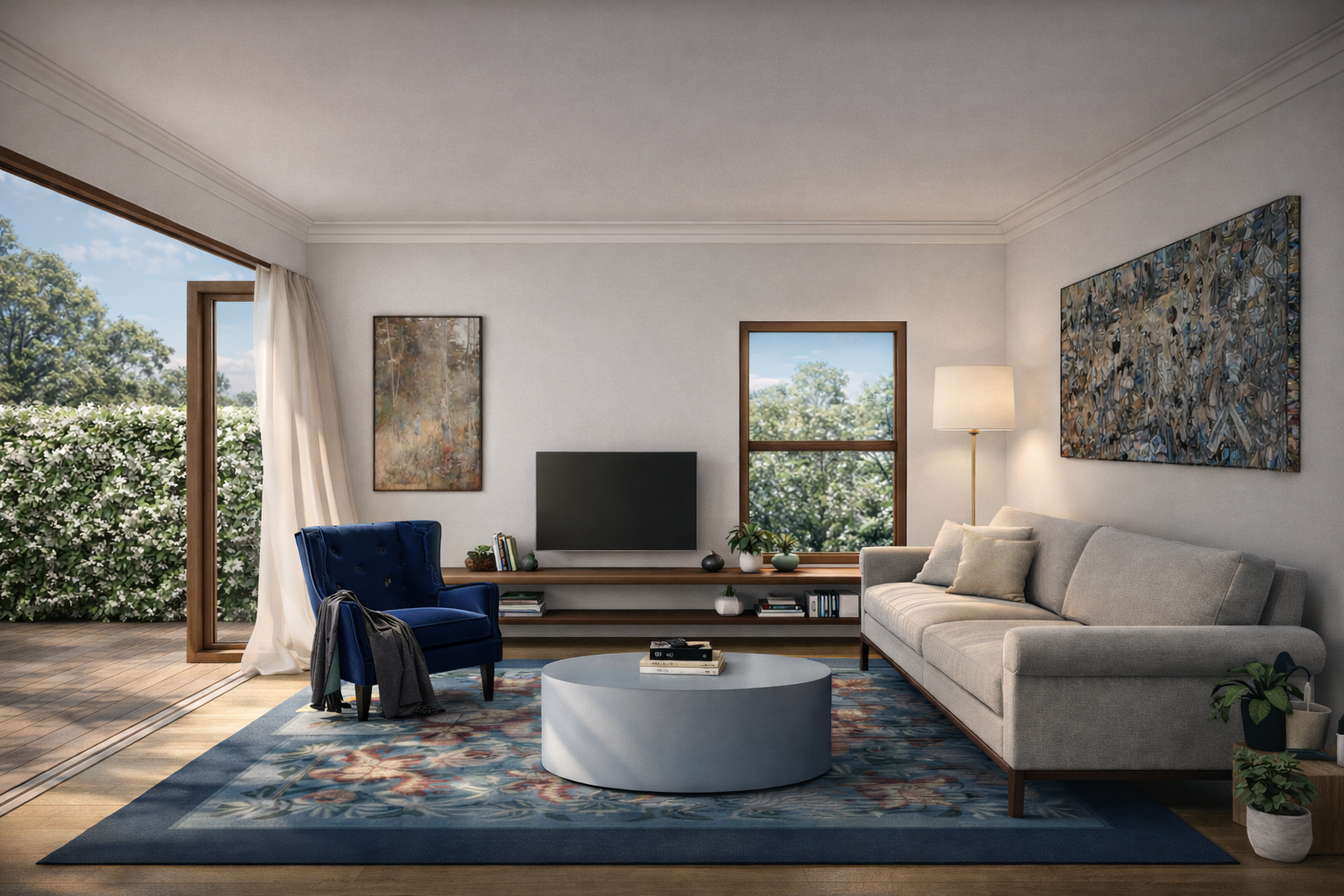
A generous bifold door allows the new living area to open seamlessly onto the rear deck, while a new window in the existing opening captures views of sky and treetops in the adjacent park.

The relocated kitchen looks more contemporary in a soft green. The dining area is demarcated in a deep green, a subtle nod to the era of the home.
This double-fronted Edwardian home sits on a prominent corner opposite a park. A great location, but one that came with challenges. Our clients, a couple planning to start a family, wanted a home that felt peaceful and comfortable, without shutting itself off from the street or losing its connection to the neighbourhood.
Because traffic noise was a big part of daily life here, we approached it from a few different angles rather than relying on a single fix. The walls and underfloor were insulated, and all windows were replaced with timber-framed double glazing. These changes restored and retained the home’s heritage elements, improved warmth and energy efficiency, but they also made a noticeable difference to street noise.
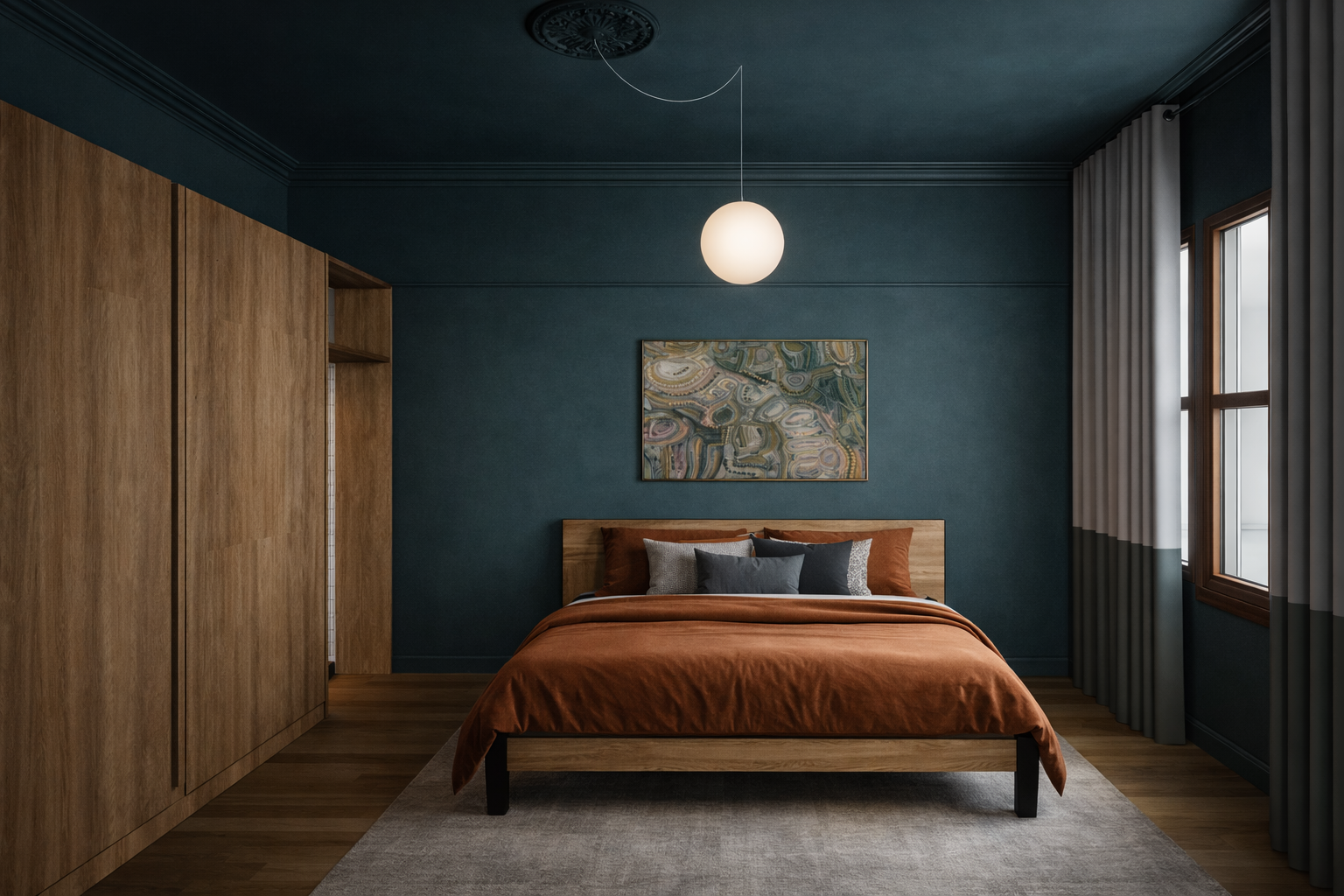
The new main bedroom is dark and brooding, with rich native Australian timbers and a deep green-blue that encapsulates the room.
We then added a softer layer of sound. A large, Australian-designed wind chime was installed outside the main living areas, creating a gentle background sound that helps mask traffic and adds a sense of calm, especially when the breeze moves through. Outside the new main bedroom, a new garden with acanthus, native violet, and jasmine hints at the era of the home, while a small water feature provides steady white noise, turning what could have felt exposed into a restful place to wake up and wind down.
Internally, the layout was reworked without increasing the footprint of the house. The original north-facing lean-to, once a collection of separate rooms, was transformed into a bright, open-plan kitchen, dining and living space that looks out to the garden and deck. New north-facing windows bring in more sunlight throughout the day, making the space warmer, brighter and far more enjoyable to use. A new east-facing window, carefully placed within an existing opening, captures views of the sky and treetops in the park opposite, a small change that makes the room feel lighter, larger, and more connected to its surroundings.
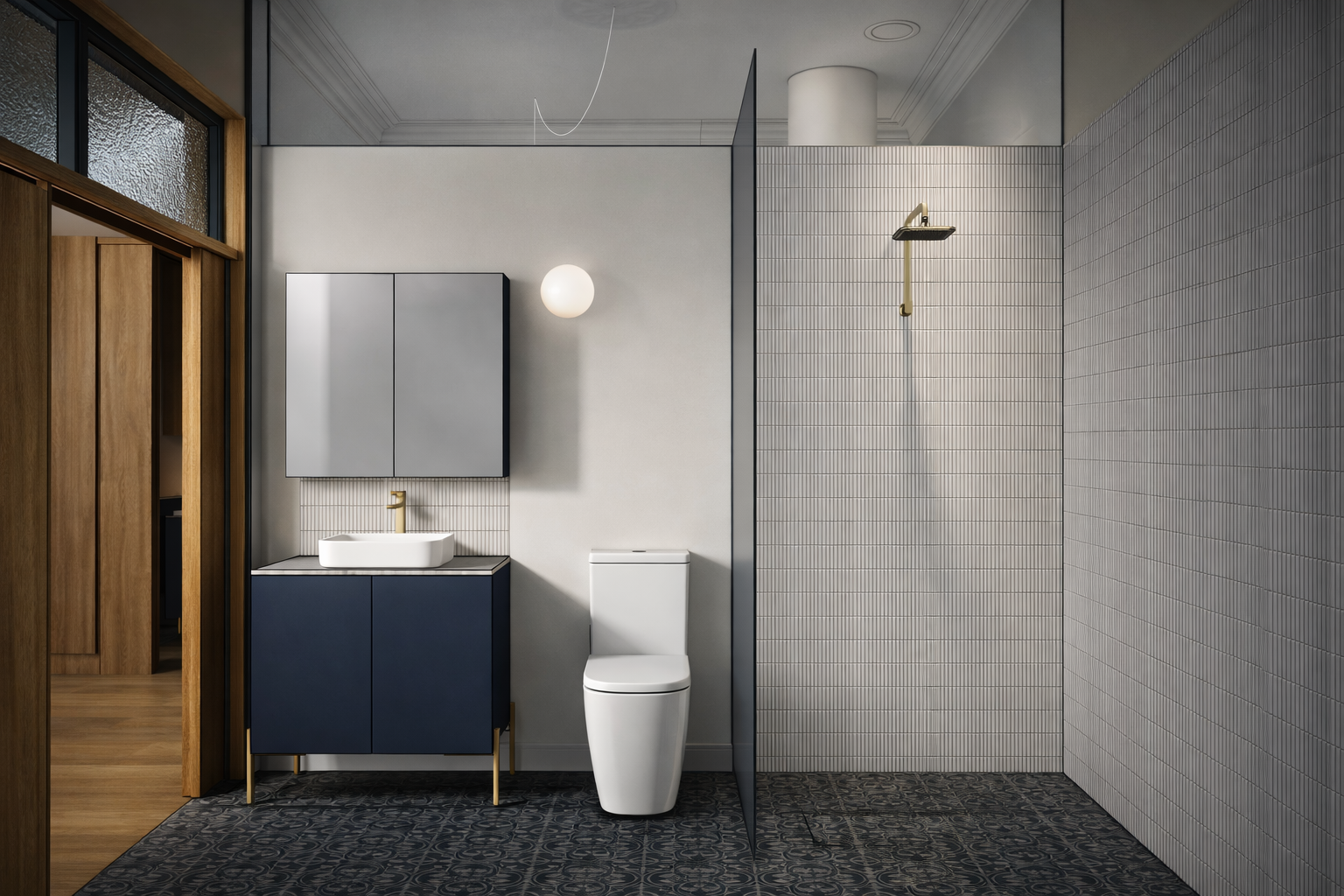
The new ensuite bathroom is simple, but efficient. A glazed section above lets allows the main bathroom to borrow light from the existing window and retains the existing ceiling rose and proportions of the room.
At the front of the house, the four existing rooms were largely retained and their heritage features celebrated. The smallest bedroom was converted into a bathroom and ensuite. This allowed the original front lounge to become the main bedroom, creating a retreat separated from the busiest parts of the home.
Where possible, existing elements were reused rather than replaced. The original kitchen, made from solid timber and still in great condition, was relocated and repainted to suit its new setting. Throughout the home, finishes and fixtures were chosen to feel fresh and contemporary, while still sitting comfortably alongside the home’s Edwardian character.
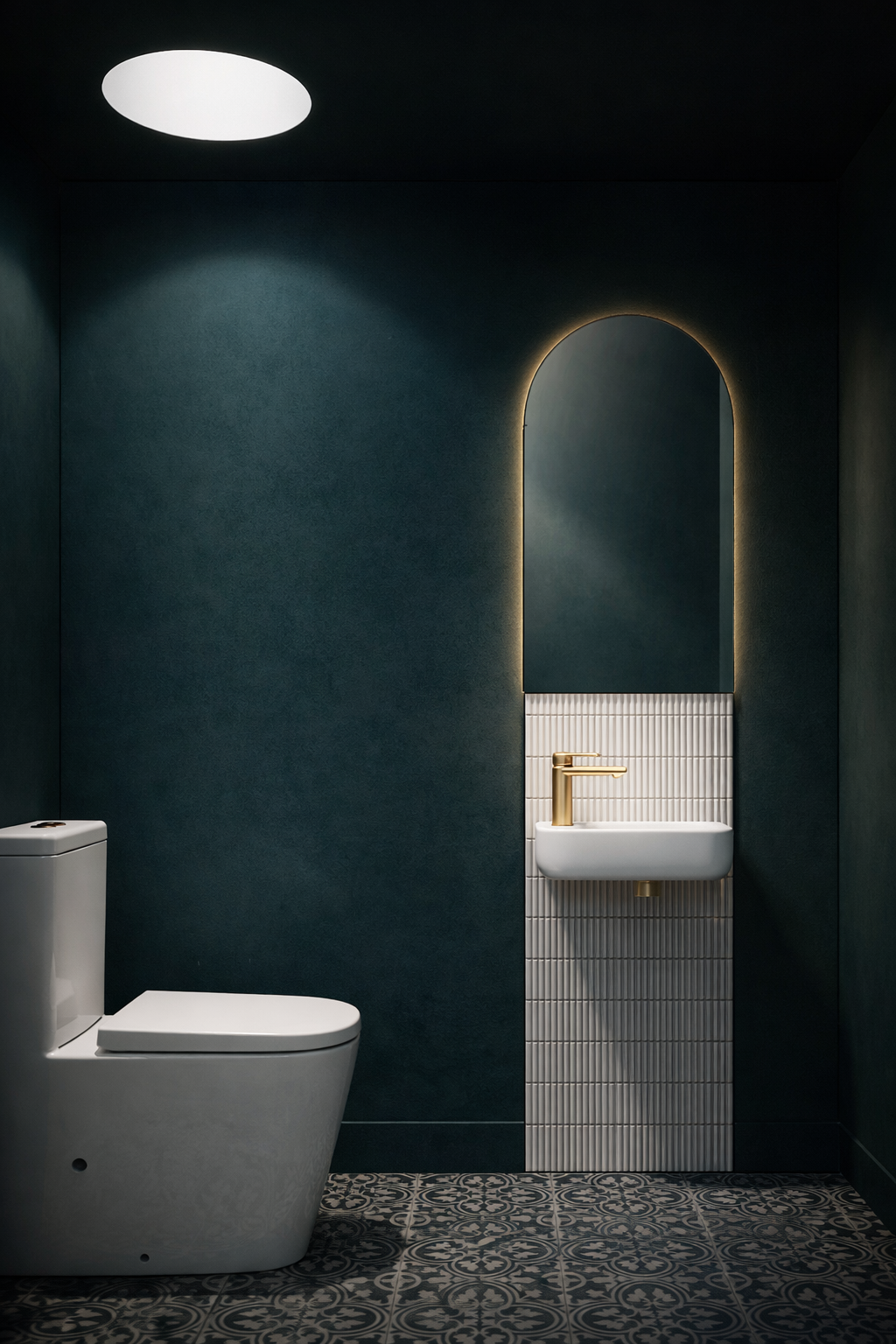
The deep green-blue, along with era-appropriate encaustic look tiles creates a luxurious and dramatic toilet room.
Because the house sits on a prominent corner opposite a park and a popular local café, it plays a visible role in daily neighbourhood life. Rather than treating this as something to screen out entirely, the design looks for ways to contribute positively to the street. A proposed mural along the side fence adds colour and interest for people passing by, while a low-maintenance native grass nature strip softens the edge of the site. The planting references the native grasslands that once covered much of Melbourne’s west, acknowledging the site’s deeper history while creating a resilient, drought-tolerant landscape that feels appropriate to its setting.
The result is a home that feels calm, bright and well protected; a place designed for everyday living, future family life, and the simple pleasure of good light, quiet moments and a strong connection to place.
Key performance goals
Improved light and solar access
Enhanced thermal comfort
Upgraded insulation or performance improvements
Addition of ensuite bathroom
Constraints and responses
Navigating heritage overlays and planning controls
Retaining specific heritage fabric
Working within tight budgets / site constraints